FeNO testing: what your breath can tell us about asthma
FeNO testing: what your breath can tell us about asthma
A simple breath test can add another piece to the asthma puzzle. Dr Jason Edgar offers fractional exhaled nitric oxide (FeNO) testing using the NObreath® device, alongside clinical assessment and lung function testing.
What is FeNO?
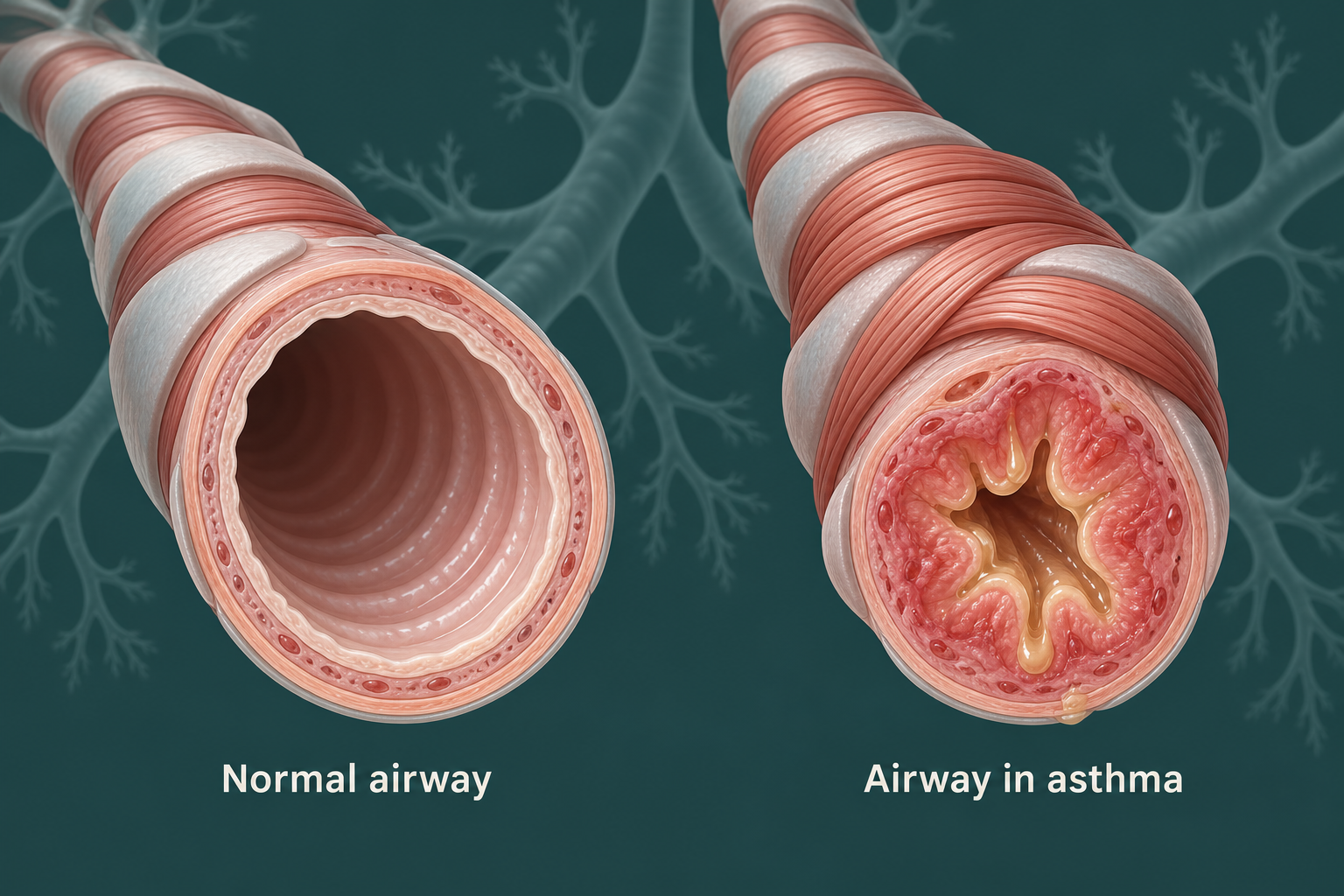
FeNO means fractional exhaled nitric oxide: the amount of nitric oxide measured in the air you breathe out. The result is given in parts per billion (ppb). Your body naturally makes this gas. In some people with asthma, inflammation in the airway lining increases the amount released into the breath.
This is particularly associated with a pattern called type 2 inflammation. FeNO gives your doctor useful information about this pattern, but it is not a stand-alone asthma test. A low reading does not exclude asthma, and a high reading does not automatically prove that asthma is the cause of your symptoms. European Lung Foundation: understanding asthma diagnosis.
Why might your doctor recommend it?
- To investigate possible asthma: particularly when cough, wheeze, chest tightness or breathlessness need further assessment.
- To help understand inflammation: the result can support a decision about anti-inflammatory treatment.
- To review treatment: comparing results over time may help clarify whether airway inflammation is responding.
- To investigate ongoing symptoms: FeNO adds information when symptoms and breathing tests do not tell the same story.
The test is an addition to the conversation, examination and other investigations. It cannot tell us everything about your lungs or replace a review of how you are feeling. Asthma treatment decisions should not be made from FeNO alone. NHLBI: FeNO and asthma care.
How is it different from lung function testing?
Spirometry looks at how much air you can blow out and how quickly. Full lung function testing may also assess lung volumes and gas transfer. FeNO asks a different question: is there evidence of a particular inflammatory process in the airways? A person can have normal airflow on the day of testing and still need further assessment for asthma. Your doctor combines these different pieces of information rather than choosing one test as the whole answer. ERS adult asthma diagnostic guideline.
What happens during a NObreath test?
- A member of the team explains the technique and fits a fresh mouthpiece.
- You take a breath in away from the mouthpiece.
- You seal your lips around the mouthpiece and breathe out smoothly at a steady rate, following the device's guidance.
- The team checks the quality of the manoeuvre and repeats it if necessary.
NObreath is an exhale-only device: do not breathe in through its mouthpiece. Unlike spirometry, the aim is a controlled, steady breath rather than the hardest, fastest blow you can manage. The measurement does not involve a needle or radiation. How NObreath measures FeNO.
How should I prepare?
Ask the rooms for the preparation instructions for your appointment, especially if several lung tests are planned. Tell us about your inhalers and other medicines, recent respiratory illness, smoking or vaping, and anything that made the test difficult previously. Do not stop prescribed treatment unless your clinician specifically asks you to. Bring your medication list and, where possible, your inhalers. Food, drinks, exercise and smoking can affect testing, so follow the timing instructions provided by the team. NHS patient information on preparation.
What do the numbers mean?
The following are commonly used adult interpretive ranges, not a diagnosis or a treatment prescription:
- Below 25 ppb: this inflammatory pattern is less likely to be prominent at the time of testing.
- 25–50 ppb: an intermediate result that needs careful interpretation with symptoms and other findings.
- Above 50 ppb: this inflammatory pattern is more likely and may support a response to corticosteroid treatment in the right clinical setting.
Children have different reference thresholds. These ranges come from the ATS interpretation guideline and are not identical to the cut-offs used in every asthma diagnostic pathway. ATS FeNO interpretation guideline.
Why a single number is not the whole story
Inhaled steroid treatment may bring the result down. Allergies and other factors may influence it. A result obtained before treatment cannot always be compared directly with one obtained after treatment has started. Your doctor will therefore ask what medicines you are using and consider the timing of the measurement. BTS/NICE/SIGN asthma recommendations.
For example, a higher result in someone with recurring wheeze may support an inflammatory explanation. A low result in someone already taking a preventer inhaler does not mean their original asthma diagnosis was wrong or that they should stop treatment. These are illustrative examples, not rules for changing your medication. Current asthma guidance emphasises that low FeNO does not remove the potential benefit of inhaled corticosteroid-containing treatment. GINA 2026 asthma guidance.
Arrange an assessment
To discuss whether FeNO testing would be helpful, phone 044 803 2497 or email reception@dredgar.co.za. Referral requests are screened to triage urgency and an appointment will be promptly arranged. Please mention your symptoms and any previous asthma or lung function assessment when booking.
This article is general patient education. Your result needs interpretation by your treating clinician. Severe or rapidly worsening breathing difficulty requires urgent medical care; do not wait for an outpatient FeNO appointment.
Prepared September 2026. Clinical sources are linked throughout.
Share this article
Know someone who might find this useful? Pass it on.
Respiratory education from Dr Jason Edgar
Pulmonologist & Specialist Physician · dredgar.co.za