Indwelling pleural catheters: a practical referral guide for GPs
CLINICAL REFERRAL GUIDE · 13 SEPTEMBER 2026
Indwelling pleural catheters: a practical referral guide for GPs
Patient selection for recurrent symptomatic pleural effusions, IPC versus pleurodesis, and practical referral and follow-up considerations.
The role of an indwelling pleural catheter
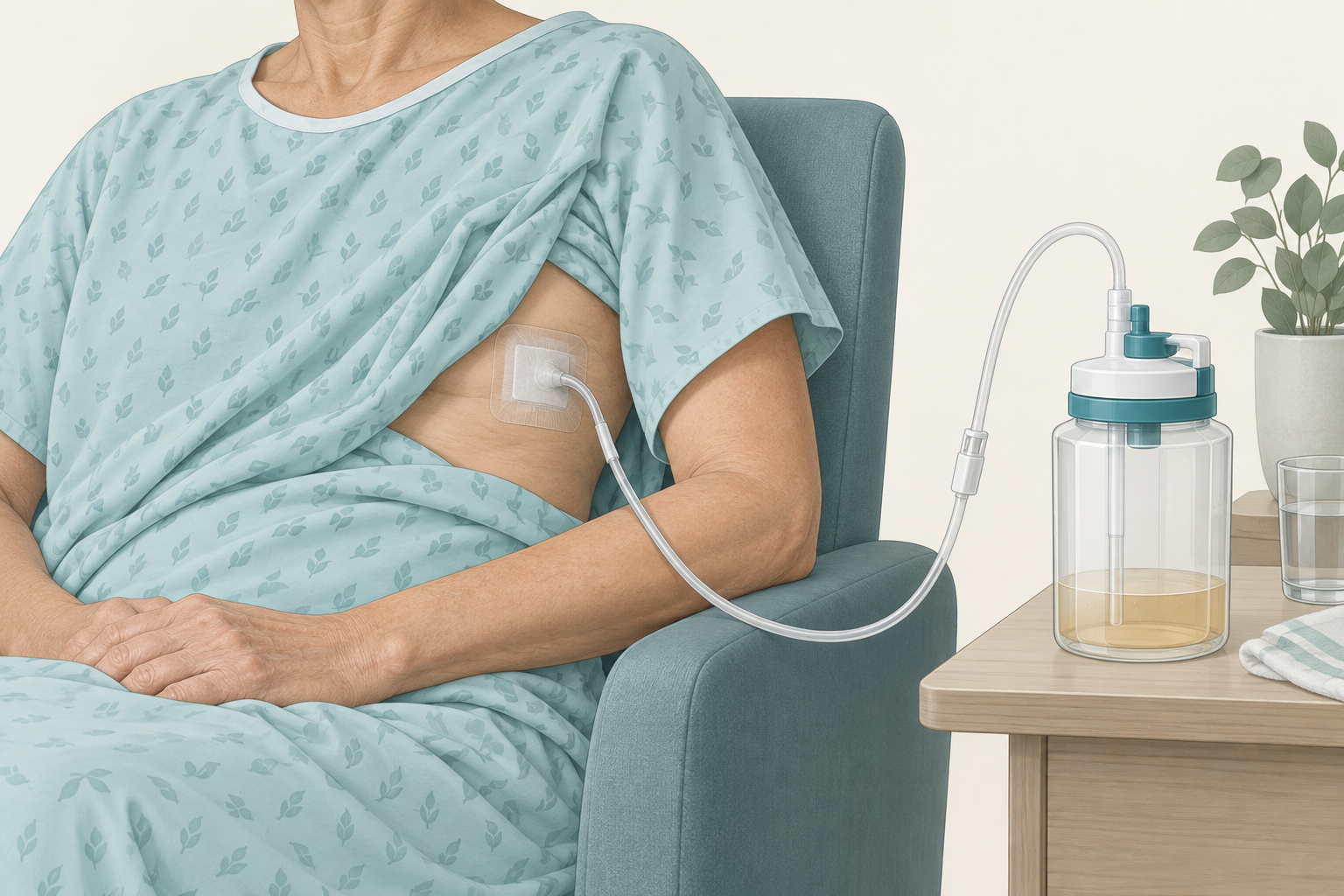
An indwelling pleural catheter (IPC) is a tunnelled catheter that allows repeated drainage of a recurrent pleural effusion outside hospital. The aim is symptom control and fewer repeat invasive procedures. It does not treat the underlying malignancy or replace investigation of an unexplained effusion.
Which patients may benefit?
- Patients with recurrent, symptomatic malignant pleural effusion who prefer an ambulatory drainage strategy.
- Patients with symptomatic non-expandable lung, where pleural surfaces cannot adequately appose for effective pleurodesis.
- Selected patients whose effusion recurs after pleurodesis.
For malignant effusion with an expandable lung, IPC and talc pleurodesis are both options. Choice depends on symptoms, expected recurrence, patient priorities and the practical burden of catheter care. Initial aspiration can help establish whether fluid removal improves breathlessness. BTS pleural disease guideline, 2023.
IPCs are not routine treatment for cardiac, hepatic or renal transudative effusions. Consideration is reserved for selected refractory cases after optimisation of the underlying condition. Active pleural sepsis and inability to arrange safe ongoing catheter care require particular caution. BTS pleural procedures statement.
When to consider referral
Refer when breathlessness and fluid repeatedly return after aspiration, when imaging suggests non-expandable lung, or when repeated hospital drainage is becoming burdensome. A new unexplained unilateral effusion merits diagnostic assessment first, rather than a direct request for long-term catheter placement.
Helpful referral information and follow-up
Send imaging, pleural fluid cytology and microbiology, the working diagnosis, previous drainage dates and symptom response, relevant medication and anticoagulation details. Describe mobility, patient preferences and available home or nursing support. Drainage supplies, training and follow-up must be arranged before discharge.
Complications include infection, discomfort, bleeding and blockage. New fever, redness, purulent drainage or worsening breathlessness needs prompt clinical review. A non-draining catheter with persistent dyspnoea requires reassessment. NHS IPC information.
Discuss a referral
Referrals are welcome by phone on 044 803 2497 or by email to reception@dredgar.co.za. All referrals are screened to triage urgency, and an appointment will be promptly arranged.
George consultations begin in November 2026. Milnerton consultations continue until the end of October 2026.
Educational information for healthcare professionals. Referral decisions and investigations should be individualised to the patient and local resources. Phone and email referrals do not replace emergency assessment.